
How Exited Founders Turn Their Exit Story Into a Premium Self-Published Book (And Why It Matters)
You sold your company. You survived the chaos, hit your number, maybe made it rain. Now what? For an increasing number of exited founders, the answer is a book—not as a vanity project, but as a strategic asset that amplifies your next act. Whether it's speaking fees, board seats, raising a new fund, or simply cementing your legacy, a professionally produced book is one of the most underrated wealth and credibility multipliers available. The problem? Most founders have no idea how to actually make one without getting lost in editorial quicksand or blown away by cost overruns.
The Founder's Publishing Dilemma: Premium or Bust
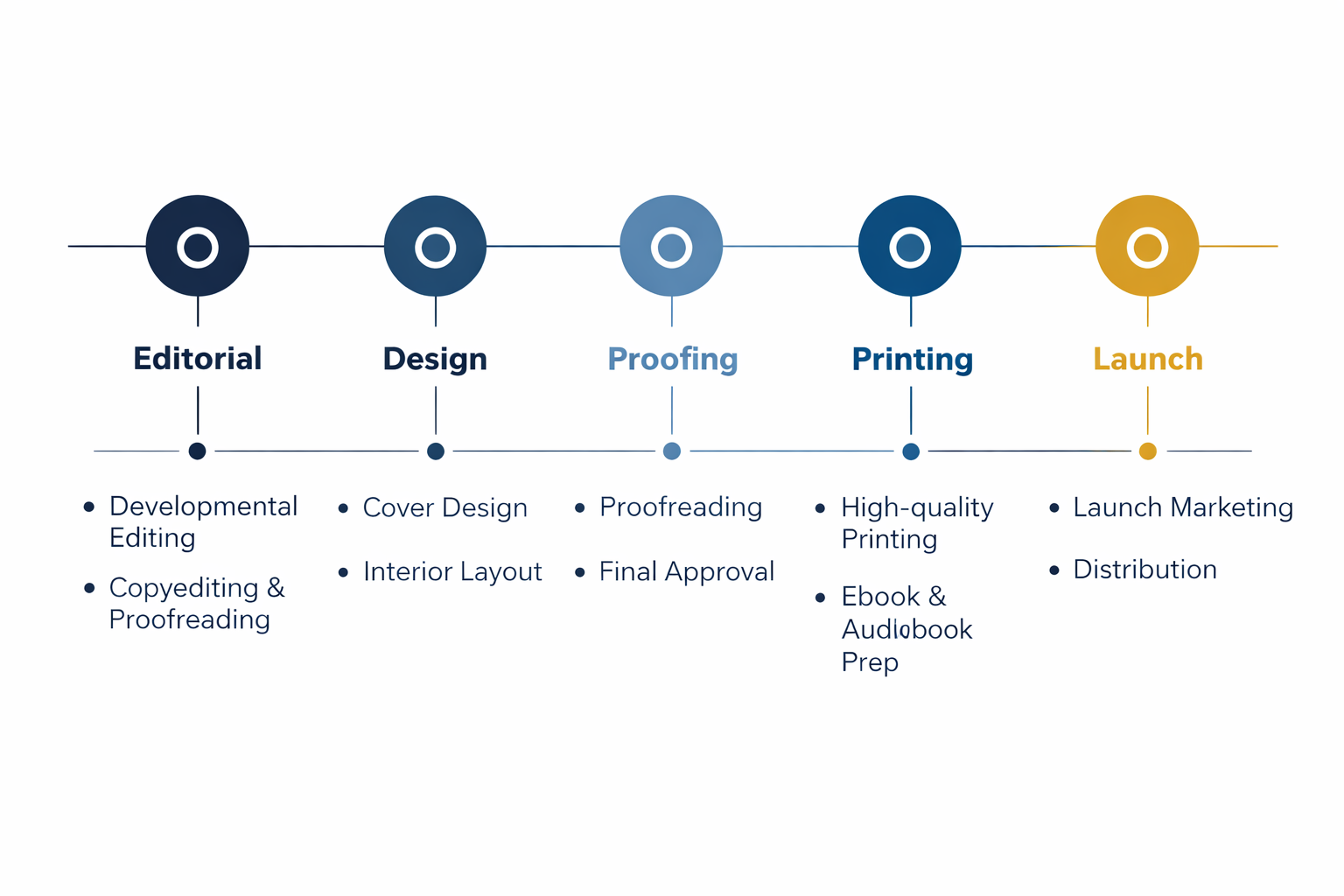
Here's the uncomfortable truth: a mediocre book damages your brand. If you've built something worth talking about, your book should look and feel like it. That means investing in editorial expertise, professional design, high-quality printing, and a coordinated launch. The good news? This isn't some mysterious, years-long process anymore [Citation].
The traditional publishing path—agent queries, rejection, months of waiting—doesn't work for people with momentum. Self-publishing, meanwhile, has lost its stigma and evolved into a legitimate channel for founders who want control, speed, and ownership. But "self-publishing" doesn't mean doing it alone. It means hiring a team of professionals (editor, designer, proofreader, audiobook producer) and having someone—a true project manager—orchestrate the whole thing so you can focus on the work itself.

The Real Cost (And Why It's Not What You Think)
Founders operate on data. Let's talk numbers. A premium self-published business or founder memoir typically runs $50,000 to $115,000+, depending on complexity. This covers developmental editing, copyediting, proofreading, fact-checking, professional cover design, interior layout, high-quality printing materials (paper stock, binding), ebook production, and audiobook narration and production [Citation].
That sounds like a lot until you do the math: a book that lands you one speaking engagement at $25K+ or opens a board opportunity worth $50K+ more than pays for itself. More importantly, it's an asset you own outright. You control the rights, the design, the message, and the distribution. No publisher, no agent taking 15%, no approval delays.

The Timeline That Actually Works
Most founder-level projects take 4 to 6 months from start to publication, though photo-heavy books (think founder memoirs paired with studio shots or lifestyle images) can extend that timeline. The key is building in flexibility for iteration, professional feedback, and—this matters—your own availability. You're not disappearing for six months; you're spending focused time on interviews, feedback rounds, and strategic decisions [Citation].
The real accelerant is having a single point of contact—someone who manages subcontractors, holds timelines, and escalates roadblocks so you don't have to.
From Story to Leverage
The hard part isn't writing; it's deciding what story to tell. Do you chronicle the exit? Lessons learned? A playbook for the next generation? The best founder books are specific, vulnerable without being reckless, and designed for a clear outcome: speaking gigs, media, community, or business development.
Once your book is finished and printed, the work shifts to leverage. A well-coordinated launch—press outreach, podcast circuit, LinkedIn activation, email campaigns—turns a book into a platform. That's where the real ROI happens [Citation].

The Bottom Line
A premium self-published book is no longer a hobby or a dream project—it's a professional tool for founders ready to leverage their exit into their next opportunity. If you've built something worth sharing, your book should be just as polished.
